Beyond the Training: How Circle of Security Strengthened Relationships Across Our Community
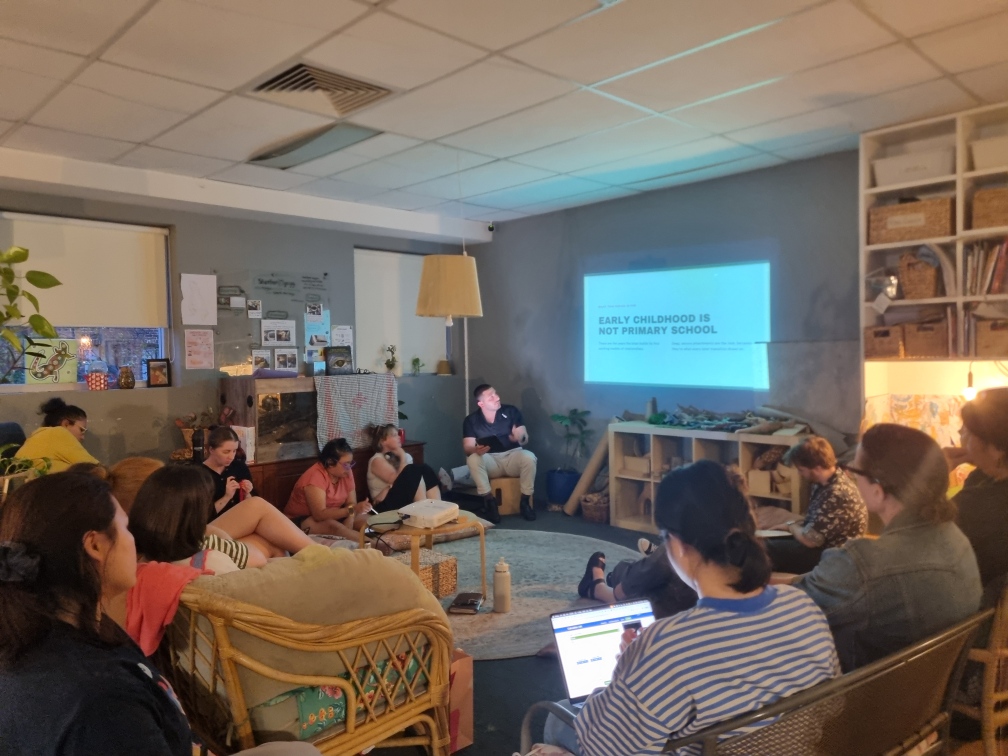
After a whole-team Circle of Security program facilitated by child psychologist and Circle of Security facilitator Patrick, educators were given time and space in thinking pairs to reflecton what they learned. Those reflections were then shared with Patrick to consolidate our learning as leaders and to enable Patrick to understand the impact of the program on our team.
What emerged wasn't simply a discussion about attachment theory or professional development. Instead, it became a deeper exploration of leadership, relationships, reflection, and what it means to create environments where both children and adults feel safe enough to grow. One thing became clear very quickly: the most significant outcomes were not necessarily the ones we expected.
Leadership as a Secure Base
When Patrick reflected on his experience delivering Circle of Security with our team, one thing stood out.
"The leadership team being present in the actual setting was super important."
Rather than organising the training and stepping back, the leadership team participated alongside educators. Patrick explained that while leaders are often present during professional development, they do not always engage in the same deeply reflective way. We sat in the circle, reflected openly, and shared our experiences. Circle of Security asks participants to consider how their experiences shape their responses to children, families, and colleagues. To support educators effectively, we needed to understand their strengths, challenges, and experiences, and to sit beside them rather than above them. For us, leadership has always been relational.
By participating fully, we modelled vulnerability and reflective practice. In turn, educators felt safer to share their own experiences. Trust wasn't built because participation was expected.It was built because everyone entered the process together. One concept that resonated strongly was the idea of being a secure base, or "dock", for others.
As Su reflected:
"We need to be the dock for the teachers."
Just as children need someone to return to before confidently exploring the world, educators also need support, stability and connection. The emotional demands of early childhood education are significant, and Circle of Security prompted us to think more deeply about the role leaders play in creating environments where educators feel safe, valued and supported.
Listening for the Shark Music
Another concept that quickly became part of our everyday language was "shark music".
In Circle of Security, shark music refers to the worries, fears, assumptions and past experiences that influence how we respond in particular situations. Patrick encouraged us to think about shark music not only in relation to children but also within teams and in understanding families.
Those conversations led to powerful insights. As educators shared aspects of their personal histories and experiences, we gained a deeper understanding of what shaped their perspectives and practice. Responses that may once have seemed confusing began to make more sense.
As Mel reflected:
"There was so much insight into our team and what childhood experiences they bring to their teaching and the impact that has on some of their relationships with children."
Importantly, this wasn't about labelling people. It was about developing empathy. Rather than asking what was wrong, we found ourselves wondering what experiences might be influencing a person's response.
Circle of Security also reminded us that educators do not leave their personal experiences at the door. We all bring stressors, beliefs, hopes and challenges into our daily work. Developing a shared language around these ideas helped us respond to one another with greater understanding and care.
Reflection Beyond the Training
One of the most valuable outcomes of the Circle of Security process was that the learning didn't stop when the sessions ended. Patrick described himself as a facilitator of reflection. The training provided a framework, but much of the learning happened between sessions as educators continued conversations in meetings, classrooms and lunchrooms.
As Mel reflected:
"The reflections didn't only happen in those sessions. They continued to happen, and they continued to happen in relationship with the children in their care."
Educators noticed children moving around the circle. They reflected on moments of connection and separation. They recognised shark music in themselves, colleagues, families and children. Most importantly, they did this together.
Patrick spoke about the difference between learning a skill and integrating it into practice. Real change, he explained, happens through reflection, discussion and repeated use in everyday situations. Because the entire team participated in the training, we developed a shared language. Concepts such as being a secure base, shark music and being with children in their emotions became part of everyday professional dialogue. That shared language has become one of the most enduring outcomes of the experience.
Extending the Learning to Families
As the learning became embedded in our service culture, our attention naturally turnedtoward families. Children do not experience attachment and security in isolated settings.Their relationships extend across home, early childhood settings and the wider community. The concepts and language of Circle of Security have helped us communicate moreeffectively with families about children's experiences, emotions and needs.
We have begun developing resources to support families, particularly around significant moments such as arrivals and departures. Drop-off times can be challenging for children and adults alike, and understanding ideas such as secure attachment, connection and consistency can help everyone navigate those moments with greater confidence. For us, the goal is to build a shared understanding that supports children across the different relationships that shape their lives.
Circle of Security and Relational Pedagogy
Towards the end of our conversation, Patrick reflected on why Circle of Security is so relevant for early childhood educators. "I feel like it's the very foundation of your relationship with children, and then you can build on that foundation."
Before children can regulate emotions, engage deeply in learning or confidently explore, they need to feel safe. Safety is not simply physical. It is relational. Children need trusted adults who are available when they need support and who encourage them to venture out when they are ready. Patrick also highlighted another idea that resonated strongly with us:
"A regulated educator naturally brings in a regulated kiddo."
For us, this connects closely with our commitment to relational pedagogy, wonder and slow practice. Circle of Security encourages curiosity over judgement and connection overcorrection. It reminds us to slow down, remain present, and genuinely be with children in their emotions.
More Than Professional Development
As we reflected on the experience, it became clear that the most significant outcomes were not tied to any single strategy or technique. It deepened our conversations and helped us develop a shared language. We strengthened reflective practice and grew our understanding of one another. In doing so, we expanded our capacity to support educators, children and families through a relational lens.
Perhaps most importantly, Circle of Security reminded us that meaningful growth does not happen in isolation. It happens in relationships. It happens when people are willing to listen, reflect, wonder and be vulnerable together. And just as children need secure relationships to thrive, educators do too.
Subscribe to newsletter
Our Blog
Explore our latest articles and discover little embers of insight. From inspiring stories, to practical guidance and support, each blog is thoughtfully written to help light the path ahead.
Strengthening Relationships: Attachment Theory for Parents
As parents and caregivers, one of the most powerful ways we can support our children is through the relationships we build with them.
How to Recognise and Respond to Bullying in Class
For primary teachers, every day is about more than teaching literacy or numeracy. They play a significant role in creating a classroom where children feel safe, connected, and ready to learn.
Why “How Was Your Day?” Isn’t Working, and What to Ask Instead
By the time school ends, most kids are running on empty. They’ve spent the whole day thinking, sharing, listening, navigating social moments, moving between activities, and following instructions.
Beyond the Training: How Circle of Security Strengthened Relationships Across Our Community
Professional learning often promises transformation. New ideas, new frameworks, new ways of thinking. But what happens when learning moves beyond theory and becomes part of a service's culture?


